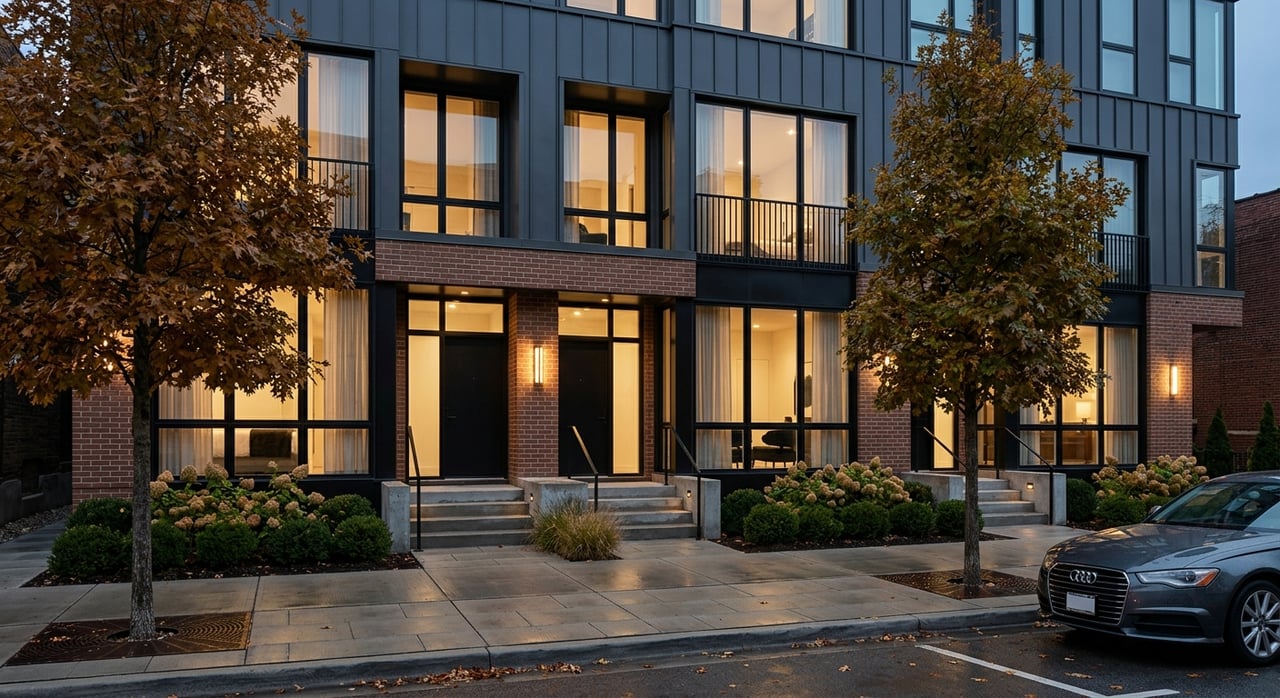
Ever wonder whether Clarendon is the kind of place where you can step out your door, grab coffee, hop on Metro, and keep your car parked for days at a time? If you are trying to figure out whether this Arlington neighborhood fits your lifestyle, that question usually sits at the center of the decision. The good news is that Clarendon offers a very specific mix of convenience, energy, and housing variety. Let’s break down what living there is actually like.
Clarendon at a glance
Clarendon is one of Arlington County’s urban villages, centered around the Clarendon Metro station. The station area covers about 212 acres and includes apartments, condos, single-family homes, offices, restaurants, bars, shops, public art, open space, and tree-lined streets.
In practical terms, that means Clarendon feels compact, connected, and active. You are not moving here for a quiet, spread-out suburban pattern. You are moving here for a walkable daily routine, quick access to transit, and a neighborhood where a lot of life happens within a relatively small footprint.
Daily life in Clarendon
Clarendon’s current personality did not happen by accident. Arlington County’s long-term planning focused on creating an accessible, connected area with a strong public realm and a rich mix of uses.
For you as a resident, that shows up in simple ways every day. You can run errands on foot, meet friends nearby, and move between home, dining, work, and transit without feeling like every trip requires a car.
Expect an urban rhythm
Clarendon tends to feel busier and more urban than many other parts of Arlington. That is largely because it sits within the Rosslyn-Ballston Corridor, where Arlington concentrated higher-density development around Metro stations.
So if you like steady activity, people out and about, and a neighborhood that stays engaged throughout the day and evening, Clarendon may feel like a good fit. If you want larger lots and a slower suburban pace, it may feel a little too active.
The neighborhood still has contrast
Even with that urban feel, Clarendon is not one-note. The county’s planning framework balances higher-density development near the core with adjacent residential areas and neighborhood conservation areas nearby.
That creates an important contrast. You get a lively mixed-use center, but you are also close to blocks that feel more residential in scale and character.
Housing in Clarendon
One of the biggest strengths of Clarendon is that it is not limited to one housing type. Arlington County describes the area as a mix of single-family homes, apartments, and condos.
That matters because your options can look very different depending on where in or around Clarendon you focus your search. The core usually feels more condo- and apartment-oriented, while the edges transition into lower-rise residential forms.
Condos and apartments near the core
If you want low-maintenance living and close access to Metro, restaurants, and retail, the neighborhood core will likely get your attention first. This is where the multifamily and mixed-use feel is strongest.
For many buyers and renters, this setup supports a simpler routine. You are trading larger private space for convenience, location, and easier day-to-day movement.
Lower-rise options around the edges
Clarendon’s planning history also includes townhouse and rowhouse-style transition areas, including around 10th Street North and North Fillmore Street. That helps explain why the neighborhood does not feel uniformly high-rise.
As you move outward from the commercial center, you will notice a softer transition into more residential blocks. That can appeal to people who want Clarendon access without being directly in the middle of the busiest streets.
A long-standing renter-heavy core
Historical demographic data from the 2010 census showed that 63.7% of housing units in the Clarendon Metro Station Area were renter-occupied. The same data showed that 42.8% of residents were ages 25 to 34 at that time.
Those numbers are historical, not current, but they help support what many people already sense about Clarendon. The area has long appealed to people who value transit access, apartment and condo living, and a more flexible urban lifestyle.
Walkability and transit
If you are considering Clarendon, walkability is probably part of the draw. Arlington County describes it as a walkable neighborhood with shops, bars, restaurants, office buildings, public art, open space, and tree-lined streets.
This is one of those places where the built environment really shapes your routine. Many daily needs can be handled close to home, which is a major reason the neighborhood remains popular.
Metro access is a major advantage
Clarendon station is located at 3100 Wilson Boulevard and is served by the Orange and Silver Lines. WMATA notes that the station does not have parking, but it does offer bike racks, lockers, and bikeshare access.
That setup says a lot about how the neighborhood functions. Clarendon is built for people who want transit as part of everyday life, not just as a backup plan.
You may not need a car every day
For many residents, Clarendon supports a car-light routine. Metro access, bikeshare, and the neighborhood’s compact layout make it easier to rely less on driving for day-to-day life.
That does not mean a car is useless. It means your decision can be more about preference than necessity, depending on where you work and how often you travel outside the corridor.
Access to Washington, DC
Clarendon’s location is one of its biggest practical advantages. Because it sits in Arlington’s Rosslyn-Ballston Corridor and directly on Metro, it offers relatively straightforward access to Washington, DC.
For buyers and renters comparing neighborhoods, this often becomes a major deciding factor. You get an Arlington address with strong transit connectivity, which can make commuting and social plans easier to manage.
Convenience drives a lot of the value
Part of Clarendon’s appeal is that convenience is built into the neighborhood itself. It is not just about getting to DC. It is also about reducing friction in your everyday schedule.
If you value time, efficient movement, and having more of your routine within reach, Clarendon tends to check those boxes. From an analytical perspective, that convenience is a big part of what supports long-term demand in Metro-oriented Arlington neighborhoods.
Dining, retail, and going out
Clarendon is one of Arlington’s better-known destinations for dining and social activity. Local sources describe a corridor with restaurants, bars, rooftop decks, retail stores, fitness facilities, and markets.
That means your lifestyle here can be very plug-and-play. Whether you want a quick coffee, a casual dinner, or a night out close to home, you typically have several options nearby.
A neighborhood with built-in activity
Current dining examples highlighted locally include Ambar, Four Sisters Grill, Liberty Tavern, Lyon Hall, Texas Jack’s, Northside Social, Screwtop Wine Bar, and Whitlow’s on Wilson. The point is not just the names themselves. It is the concentration of options within a walkable area.
For many residents, that creates real everyday value. You do not have to plan around distance nearly as much, and that can make the neighborhood feel more convenient and more social at the same time.
Who Clarendon tends to suit best
Clarendon is less about one ideal buyer and more about a certain set of priorities. It tends to work well for people who care more about walkability, transit, restaurants, and low-maintenance living than about larger yards or a quieter suburban setting.
That can include first-time buyers, renters planning their next move, couples, downsizers, and anyone who wants a more connected home base. The common thread is usually convenience and efficiency.
It helps to know your trade-offs
Every neighborhood comes with trade-offs, and Clarendon is no different. In exchange for location, access, and activity, you may get less private outdoor space and a more urban pace than you would in lower-density parts of Arlington.
That is why the best decision usually comes down to how you actually live. If your routine benefits from Metro access, nearby dining, and a compact footprint, Clarendon can make a lot of sense.
Why Clarendon stands out in Arlington
Clarendon works because it bundles several benefits into one place. You get Metro access, strong walkability, a wide mix of housing, and a commercial core that stays useful beyond just weekend entertainment.
It also occupies a valuable middle ground in Arlington. It feels more urban than many neighborhoods, but it still sits next to established residential areas that add variety to the broader setting.
If you are comparing Arlington neighborhoods, Clarendon is usually not the pick for maximum square footage or the quietest atmosphere. It is the pick for people who want convenience, connection, and a neighborhood that supports an efficient daily routine.
If you want help deciding whether Clarendon fits your goals as a buyer, seller, or investor, JSOD Properties LLC can help you evaluate the neighborhood with a clear, strategy-first approach.
FAQs
What is Clarendon like for daily life in Arlington?
- Clarendon offers a walkable, transit-oriented routine with a mix of housing, restaurants, shops, office space, public art, and open space in a compact area.
What kinds of homes are common in Clarendon?
- Clarendon includes condos and apartments near the core, along with single-family homes in the broader station area and some townhouse-oriented transition areas near the edges.
Do you need a car to live in Clarendon?
- Many residents can live with less day-to-day car use because Clarendon has Orange and Silver Line Metro service, bikeshare access, bike racks, and a walkable layout.
Is Clarendon good for commuting into Washington, DC?
- Clarendon offers direct Metro access on the Orange and Silver Lines, which helps support straightforward access to Washington, DC, depending on your final destination.
Who tends to like living in Clarendon?
- Clarendon often appeals to people who prioritize walkability, dining, transit access, and low-maintenance housing over larger lots or a quieter suburban setting.