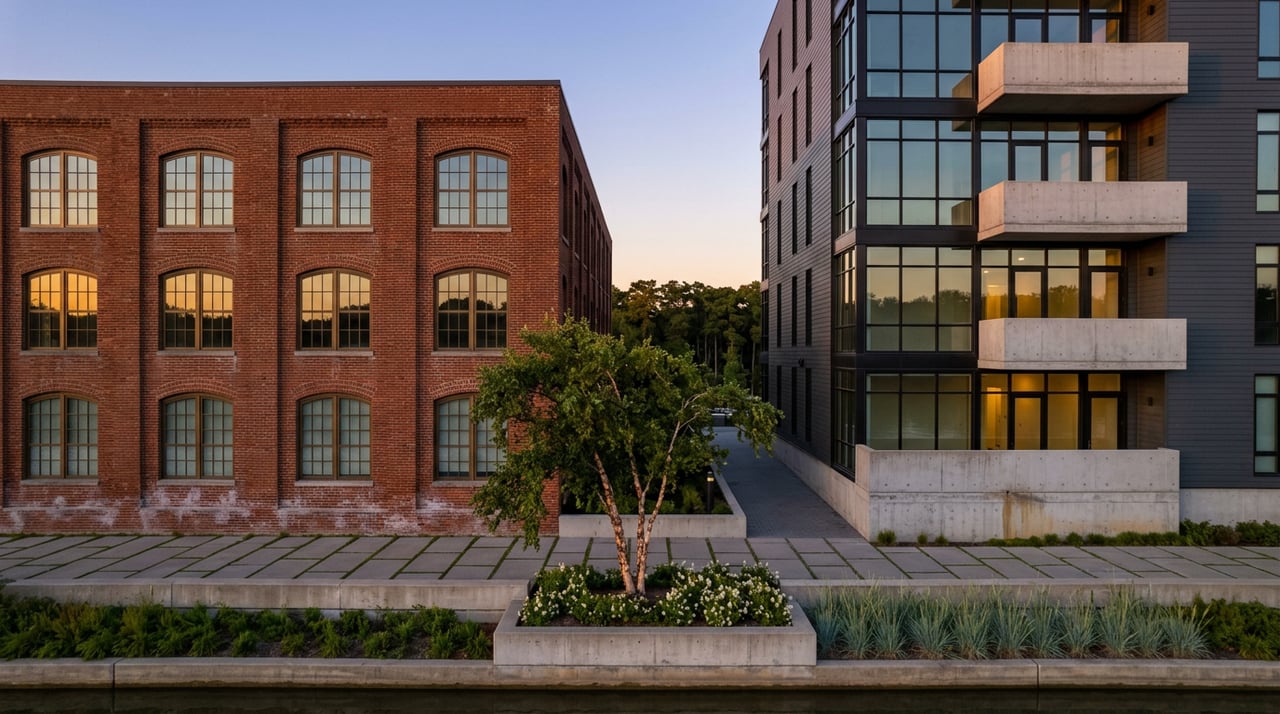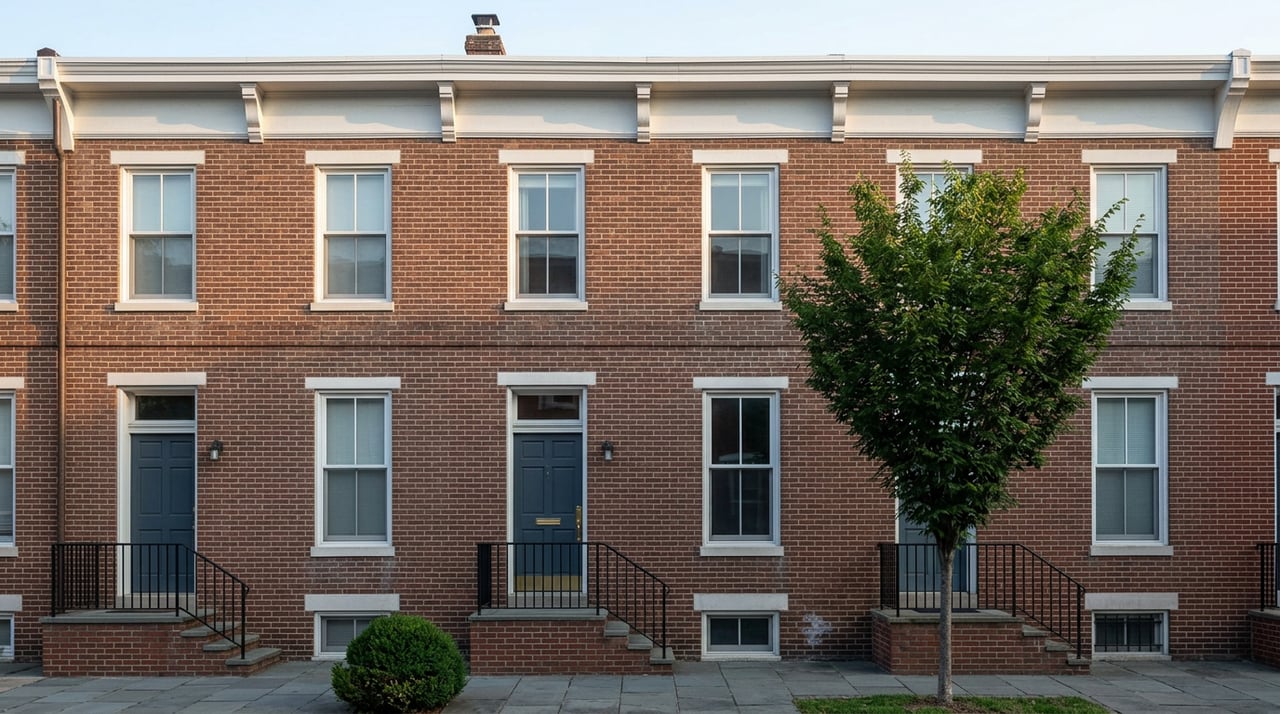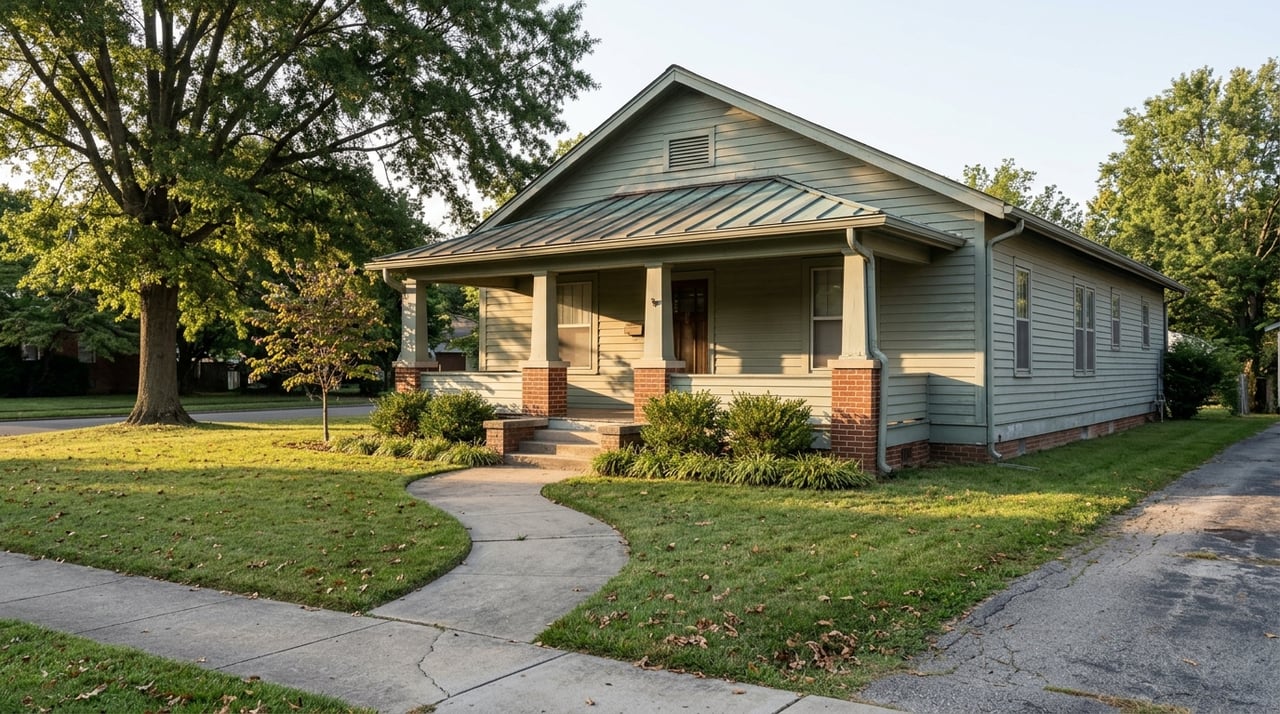
Every lot in Lyon Village, Ashton Heights, Cherrydale, Arlington Forest, and Bluemont has one. It runs fifty to a hundred and fifty feet under the lawn, the driveway, sometimes the neighbor's azaleas, connecting the house to the public main under the street. Nobody photographs it for the listing. Nobody walks it during a showing. And in Virginia, nobody is required to tell you what condition it's in.
That last part is the piece most buyers miss, and it matters more in Arlington than almost anywhere else in Northern Virginia, because so much of the county's most desirable close-in housing stock predates the pipe materials that actually hold up.
The pipe you'll own the day you close
The sewer lateral is the private connection between a house and the municipal sewer main. Arlington County maintains the main line running under the street. Everything from the house to that connection point, the lateral itself, belongs to the homeowner. That split is standard across most municipalities, but in a county where a large share of the housing stock was built between the 1920s and the 1950s, it carries more weight than it would in a newer suburb.
A camera inspection of that line typically takes anywhere from thirty minutes to a few hours, feeding a flexible waterproof camera through a cleanout to check for cracks, root intrusion, bellies, and collapsed sections. It is not part of a standard home inspection. It is a separate, specialized service that the buyer has to know to request, and it is most often recommended specifically for homes built before the 1970s.
That is the first structural gap. The second is what the law says about who has to bring it up.
Built before anyone worried about this
Arlington's oldest neighborhoods were platted and built out well before modern plastic piping existed. Lyon Village was developed starting in 1923 and was mostly complete by the early 1950s. Ashton Heights traces to the early 1900s, with construction slowing sharply after the 1950s once nearly every subdivided lot had been built on. Cherrydale is one of the county's oldest neighborhoods, with roots in the late 1800s. Arlington Forest went up in the 1940s as a planned community of Cape Cods and colonials. Bluemont's brick ramblers and frame colonials date to the same 1940s and 1950s window, and Maywood, the county's first local historic district, has homes dating to the late nineteenth and early twentieth centuries.
That timeline lines up almost exactly with the era when sewer laterals were commonly built from clay tile, cast iron, or Orangeburg, a bitumen-impregnated fiber pipe used widely in home construction from the 1940s into the 1960s. Orangeburg doesn't fail the way modern PVC fails. It deforms into an oval shape under decades of soil pressure and eventually collapses rather than cracking cleanly, which means a line can look fine on a walkthrough and be structurally compromised underground. Mature tree canopy, one of the things that makes these neighborhoods desirable in the first place, is also one of the more common reasons these older laterals fail, since root systems seek out the moisture inside aging clay and cast iron joints.
None of this shows up in a listing photo. None of it shows up on a disclosure form either, and that's not an oversight. It's the design of Virginia real estate law.
Why the disclosure form won't help you
Virginia is one of a small number of states that still operates under the doctrine of caveat emptor, buyer beware, for residential real estate. Sellers are not required to volunteer information about property defects the way they would be in a disclosure state like Maryland or California. The Virginia Residential Property Disclosure Act does require sellers to hand buyers a disclosure statement, but that form works differently than most out-of-state buyers expect. It does not certify that the home is free of problems. It states that the owner makes no representations about a specific list of conditions, and buyers are advised to investigate each one themselves before closing.
The wastewater system is explicitly on that list. Virginia's disclosure statement says the owner makes no representations about the presence of any wastewater system, including its type, size, or associated maintenance responsibilities, and directs the buyer to investigate before settlement. In plain terms, the seller isn't vouching for the sewer lateral, and the standard form isn't the place to look for reassurance about it. The protections that do exist are narrow. A seller can't lie outright if directly asked. A seller can't actively hide a known defect, painting over water damage, for instance. But silence about a pipe they may not have thought about in fifteen years isn't fraud. It's just silence, and the law puts the burden of finding out on the buyer.
The clock nobody mentions at ratification
Here's where the timing gets tight. Northern Virginia contracts typically give buyers a home inspection contingency period of around seven days from ratification, sometimes stated as five business days, followed by a separate negotiation window, often around five more days, once the inspection report and repair requests are submitted. That short first window is when a buyer decides whether to move forward, request repairs, or walk away with earnest money intact.
A sewer scope has to happen inside that same narrow window, alongside the general home inspection, any radon test, and whatever specialist follow-ups the general inspector flags. It is easy to see how it gets crowded out, especially in a compact seven-day span where scheduling a second contractor on short notice is its own logistical problem. Buyers who wait to hear whether the general inspector even mentions the sewer line, rather than proactively booking the scope on day one, often find there isn't time left to act on what they learn.
What the repair bill actually looks like
If a scope does turn up a failing lateral, the range is wide but not vague. Trenchless lining, the least disruptive fix and often the preferred option on Arlington's tight, mature lots, runs roughly $135 to $150 per linear foot. On a lateral in the fifty to hundred-and-fifty-foot range typical of a residential connection, that puts a straightforward reline somewhere between roughly $6,750 and $22,500 before accounting for depth, driveway crossings, or multiple collapsed sections that push the job toward full excavation instead. Full replacement, particularly where trenchless methods aren't feasible, has been quoted broadly between $4,500 and $18,000 or more depending on length and access.
The insurance backstop most buyers assume exists usually doesn't. Standard homeowners policies typically exclude damage from normal wear, aging, or root intrusion. Coverage generally kicks in only for sudden, accidental events, which a decades-old Orangeburg line slowly collapsing under a maple root is not.
The seller's version of the same problem
This cuts both ways. A seller in one of these older neighborhoods who orders a camera scope before listing, rather than waiting to find out during someone else's contingency period, controls the story instead of reacting to it. A clean scope becomes a marketing point. A flagged issue becomes something to price in or address on the seller's timeline instead of the buyer's seven-day clock, where a bad surprise tends to produce a request for a credit that's larger than the actual repair, simply because the buyer is negotiating from a position of not knowing what they don't know.
Before writing or accepting an offer on a pre-1970s Arlington property, a short list is worth having on hand:
- Ask the listing agent whether a sewer scope has ever been done and whether documentation exists.
- If not, schedule one immediately inside the inspection contingency window, not after the general report comes back.
- Ask the inspector or plumber for the pipe material and approximate length, not just a pass or fail.
- If lining or replacement is warranted, get repair terms or a credit in writing before the negotiation period closes.
A few direct questions
Does this only apply to homes built before a certain year? There's no hard cutoff, but risk rises meaningfully for homes built before the 1970s, which covers most of Arlington's close-in historic neighborhoods and much of the county's postwar housing.
Can I still request a sewer scope after I've already signed a contract with a standard inspection contingency? Yes, as long as it happens inside the contingency window already negotiated. It is treated as one more specialist inspection alongside anything else the general inspector recommends, not a separate contingency of its own.
Will my homeowners insurance cover a failing lateral once I own the home? Usually not for gradual failure. Most standard policies exclude wear, aging, and root intrusion, covering only sudden, accidental damage, so budgeting for this as a maintenance item rather than an insured risk is the more realistic approach.
Arlington's older neighborhoods earn their prices for real reasons: the lots, the trees, the walk to the corridor, the bones of houses built before anyone was in a hurry. None of that changes what's buried underneath them. If you're buying or selling in Lyon Village, Ashton Heights, Cherrydale, Arlington Forest, Bluemont, Maywood, or anywhere else in the county's prewar and postwar ring, Joshua Odmark can walk you through exactly what to request, when to request it, and how to negotiate from a position of knowing rather than hoping. Let's Connect.