As The Richmonder reported, "It's not as many units as we would like to have, but it's better than zero."
That's Michelle Brown Peters, Richmond's deputy director of housing and community development, describing five years of results from the city's rehab tax exemption program to a City Council committee this summer. Peters was making a modest, almost cautious claim about a program often referred to informally as the Richmond tax abatement. For a buyer under contract on a fixer in Church Hill, understanding Richmond BizSense's reporting on the July 1, 2020 program change can matter when budgeting a gut renovation.
Here's the claim this post is built to support: the "Richmond tax abatement" that still circulates in renovation conversations across Church Hill, the Fan, Museum District, Jackson Ward, Scott's Addition, Randolph, and Northside describes a program that no longer exists in that form. The version that ran for decades offered a tax exemption for rehabs. City Council repealed that framework and replaced it with something built around affordable housing set-asides. The figure Peters cited to Council this summer—just under 300 units produced or preserved in five years citywide—summarizes the reported results.
How Richmond's rehab tax exemption changed in 2020
Richmond's tax code has carried rehab abatement provisions for decades, filed under divisions in Chapter 26 with names like "Partial Exemption of Rehabilitated Structures From Real Estate Taxation" and "Partial Tax Exemption in Redevelopment and Conservation Areas and Rehabilitation Districts." The version most renovators still describe offered a tax exemption for rehabilitating older homes.
In January 2020, Richmond City Council adopted an ordinance that repealed that broad exemption and replaced it with a program tied to affordable housing outcomes, effective that July. The change moved through as part of a routine consent agenda, and Richmond BizSense's coverage at the time captured both sides of the argument. Critics warned it would hit individual homeowners and small-scale historic renovators hardest, naming corridors like Church Hill and Brookland Park Boulevard as places that had relied on the old incentive. Council member Michael Jones, one of the bill's patrons, argued the opposite case: that the prior program had mostly benefited individual homes in the West End, Northside, Scott's Addition, and Church Hill, meaning it was subsidizing renovation in neighborhoods that were already appreciating rather than areas that needed the help. Both sides were describing the same handful of neighborhoods. They just disagreed about whether that was the program working or the program missing the point.
What actually qualifies today
The current version is called the Affordable Housing Partial Tax Exemption Program, and it is administered through the city's Department of Housing and Community Development in coordination with the City Assessor's office. Its purpose, stated plainly on the city's own program page, is to provide affordable housing by offering a partial tax exemption to owners who rehabilitate single- or multi-family properties for households earning up to 80 percent of the area median income for the Richmond-Petersburg metro. For 2026, that ceiling works out to $63,600 for a one-person household, $72,650 for two people, and $90,800 for a household of four.
The mechanics matter as much as the intent. The existing structure has to have been at its location for at least 20 years. A minimum of 30 percent of the units in the project have to be restricted to households at or below that 80 percent AMI threshold, with rent capped so it doesn't exceed 30 percent of the renter's income, verified annually. Work has to be completed within 24 months of approval. The exemption, once granted, runs for 15 years and applies only to the increase in assessed value that the renovation created, not to the property's full tax bill. If a homeowner disagrees with the city's determination of that base value, the appeal path runs through the Richmond Board of Review of Real Estate Assessments or a court, not a phone call to the Assessor.
None of that resembles the program still being described at closing tables and on renovation forums built years ago.
Current program at a glance
| Program today (AHTEP) | |
|---|---|
| Eligibility basis | Rehab that restricts at least 30% of units to households at or below 80% AMI |
| Income test on occupants | Yes |
| Structure age requirement | At its location for at least 20 years |
| Exemption term | 15 years |
| Who benefits in practice | Owners willing to rent or restrict part of the property below market |
The case that gets missed: one owner, one house
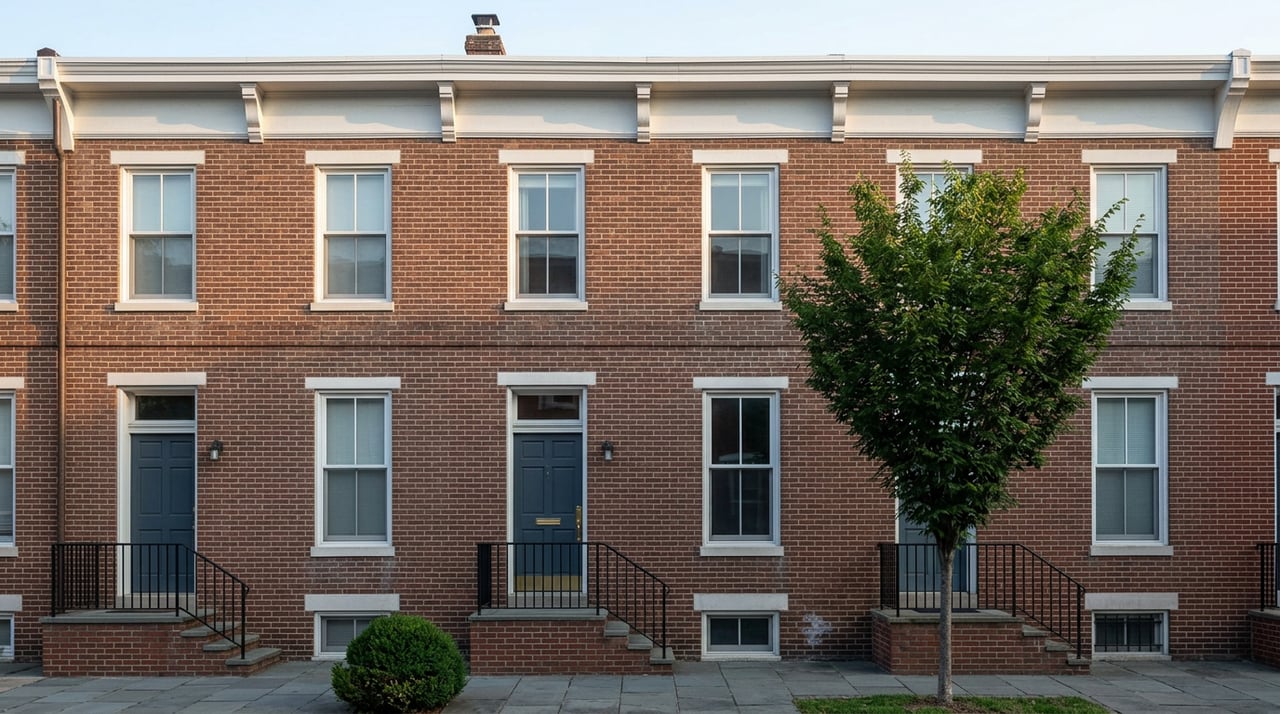
Most of the confusion isn't happening on large multi-family redevelopment deals. It's happening with the single buyer who closes on one Church Hill rowhouse, plans to gut it and live in it, and has heard secondhand that Richmond gives you a decade of frozen taxes for fixing up an old house in a historic neighborhood. The city's own program language for an owner-occupied single-family dwelling is notably narrow: it treats the affordability condition as the only requirement that kind of property has to meet. There's no second unit to restrict, no separate tenant income to verify against 80 percent AMI in the way a duplex or small apartment building would work. In practice, that leaves an individual owner-occupant renovator with a much thinner path into this program than the broader version people are still repeating.
If you're buying to renovate and live in the home yourself, the responsible move is to confirm eligibility directly with the Department of Housing and Community Development and the Assessor's office before you close, not after your contractor tells you what a similar house down the block supposedly got a few years ago.
Results from the current program
The city's accounting for the program's first five years reports the following results. Four completed projects have produced 52 affordable units and 117 market-rate units, while preserving 130 existing affordable units, with nine more projects in the pipeline. The tax exemptions granted so far have reduced city collections by roughly $253,000, while the city reports about $87,000 in new revenue tied to the resulting property value increases. Those are the figures Peters presented to Council this summer, and they describe an affordable-housing program with defined eligibility requirements rather than a general-purpose renovation exemption.
For an investor eyeing a small multi-family building in Church Hill or Scott's Addition and willing to structure part of it as income-restricted housing, that same data points to a real, underused lane worth pricing into an acquisition model. For the owner-occupant hoping the same math applies to a single rowhouse, it mostly doesn't.
Before you write the renovation budget
- Confirm the structure's age and location against the current 20-year and geographic requirements with the Assessor's office, in writing, before you assume any exemption in your numbers.
- If the plan involves any rental units, run the 80 percent AMI thresholds for your household size against the actual rents you'd need to charge on the restricted portion.
- Ask directly whether an owner-occupied single-family renovation qualifies at all under the current program, rather than relying on what a contractor, a listing agent, or an older blog post described.
- If you do qualify, build the 24-month completion window into your renovation and financing timeline.
FAQ
Does the old rehab abatement still exist anywhere in Richmond? No. City Council repealed the broad version of that exemption with an ordinance that took effect July 1, 2020, replacing it with the affordable housing-linked program described above.
Can a single owner-occupied home in Church Hill or the Fan still qualify for a tax exemption on a renovation? It's possible, but the current program's affordability condition is the operative requirement even for a single-family owner-occupant, and eligibility should be confirmed with the city before you rely on it in your budget.
How long does the current exemption last once it's approved? Fifteen years.
Where do I go to confirm eligibility before making an offer? The Department of Housing and Community Development administers the application, and the City Assessor's office determines the base value used to calculate the exemption. Both should be contacted directly rather than relying on secondhand accounts from prior renovations.
If you're weighing a renovation purchase in Church Hill, the Fan, Museum District, Jackson Ward, Scott's Addition, or Northside and want the numbers run correctly before you write an offer, Joshua Odmark works with buyers and investors who want their underwriting built on what the program actually allows today, not what it used to allow. Let's Connect.
This article is general information, not legal, tax or financial advice. Consult a qualified professional about your situation.