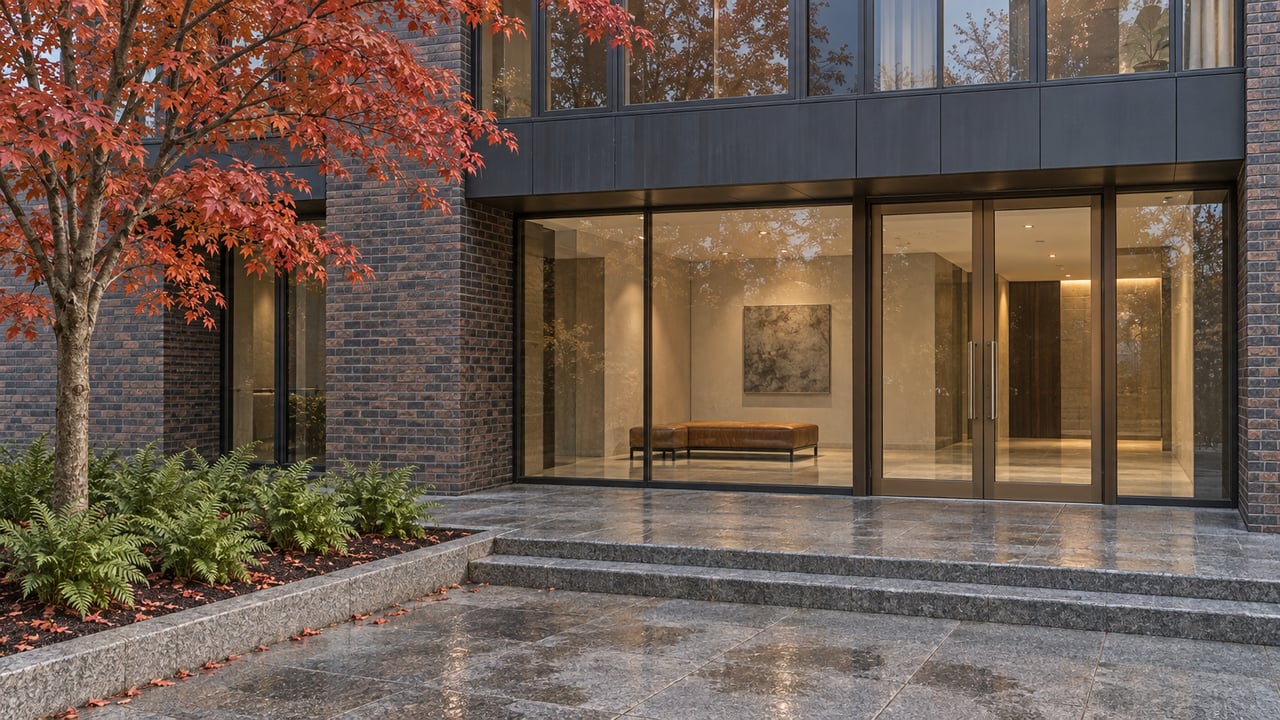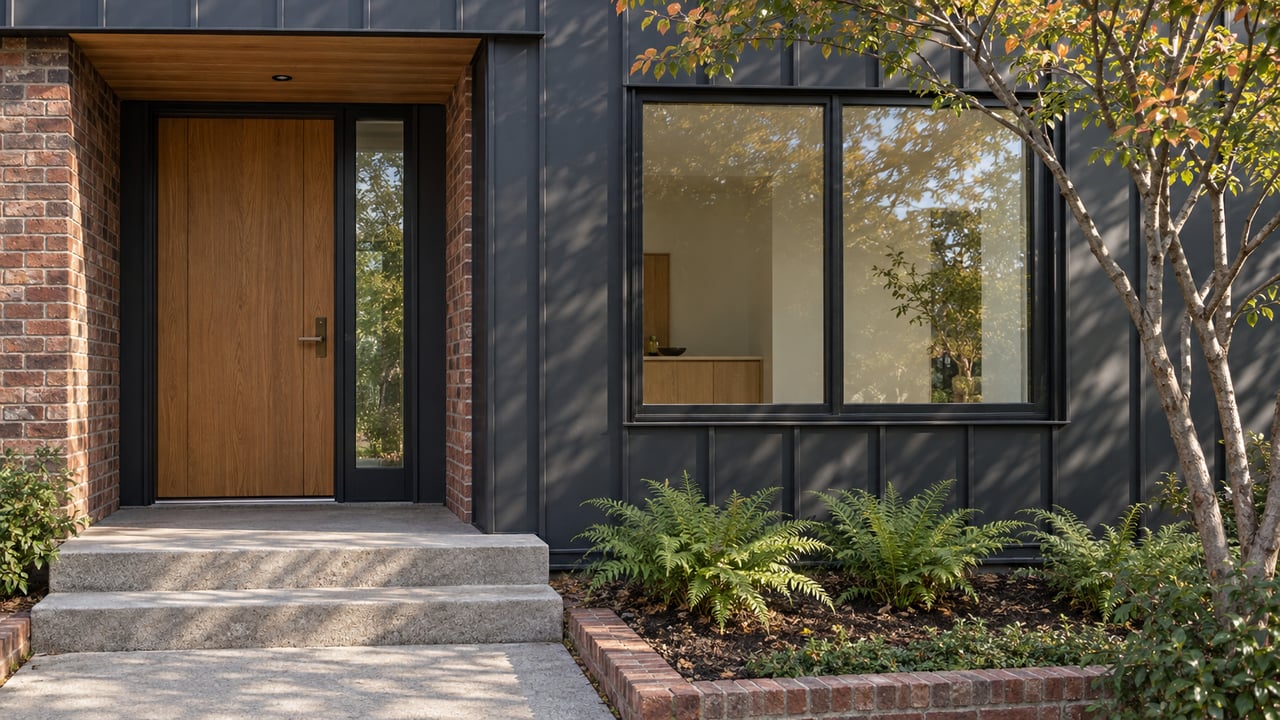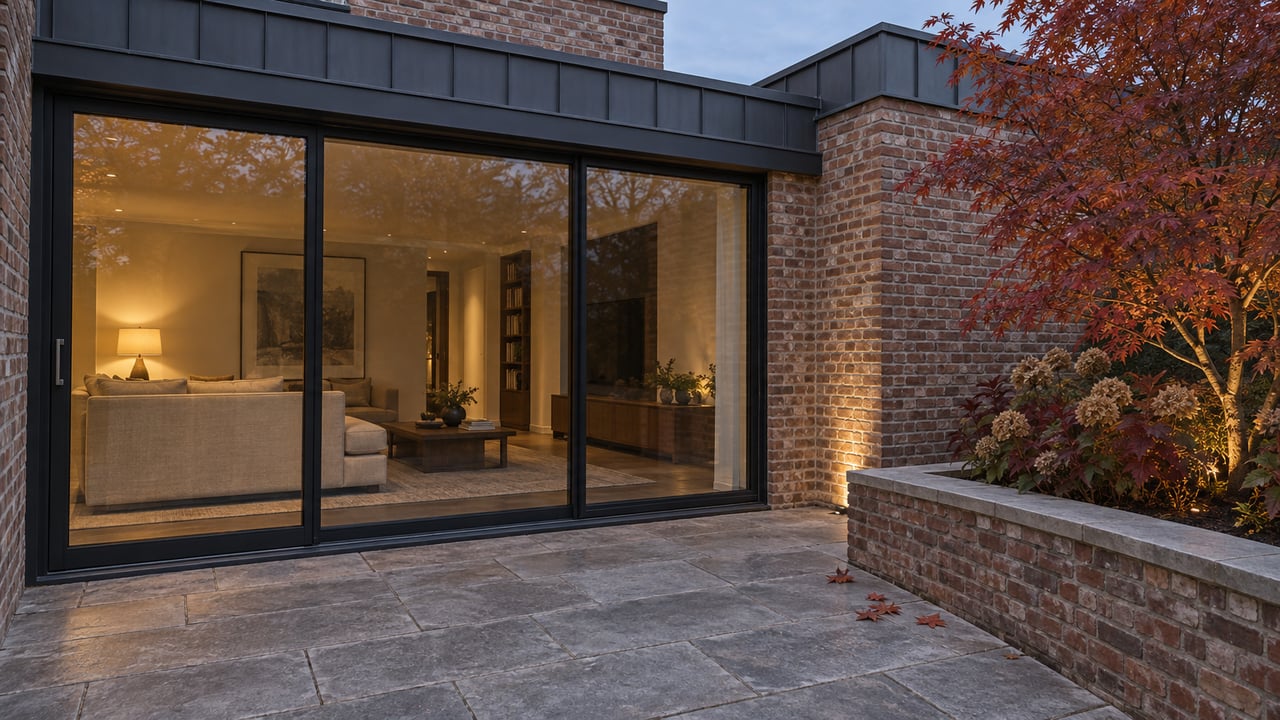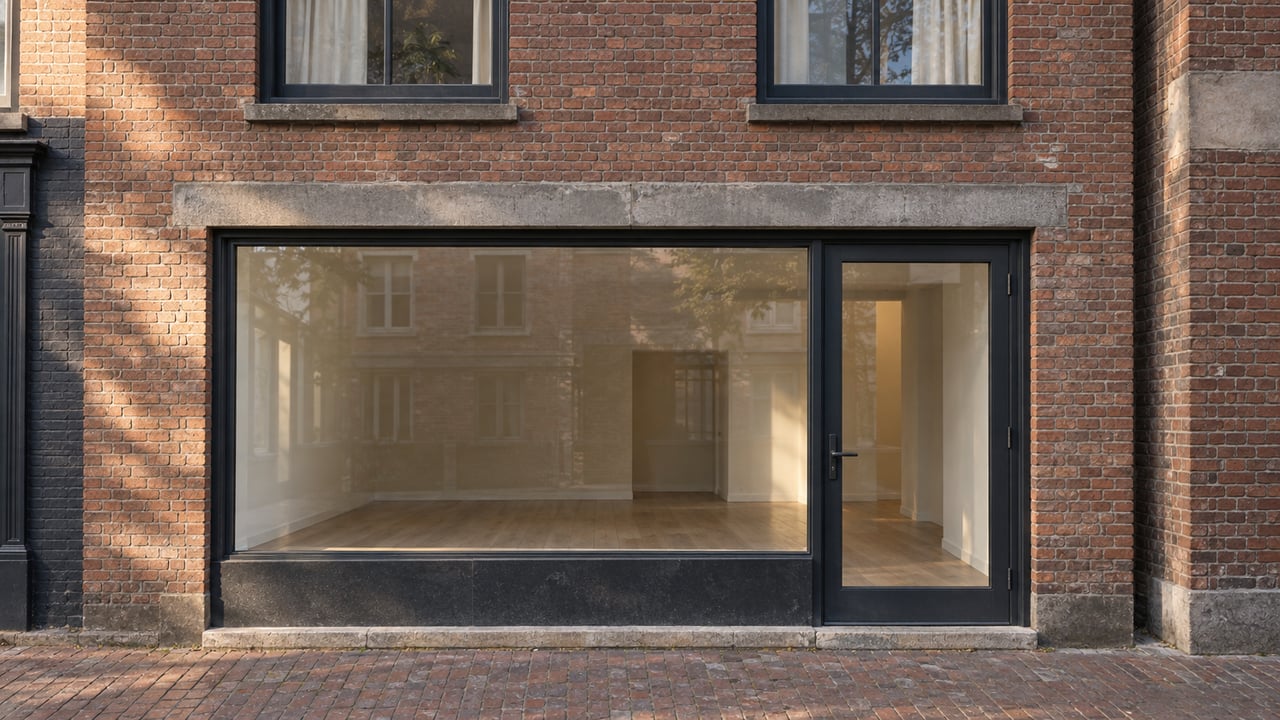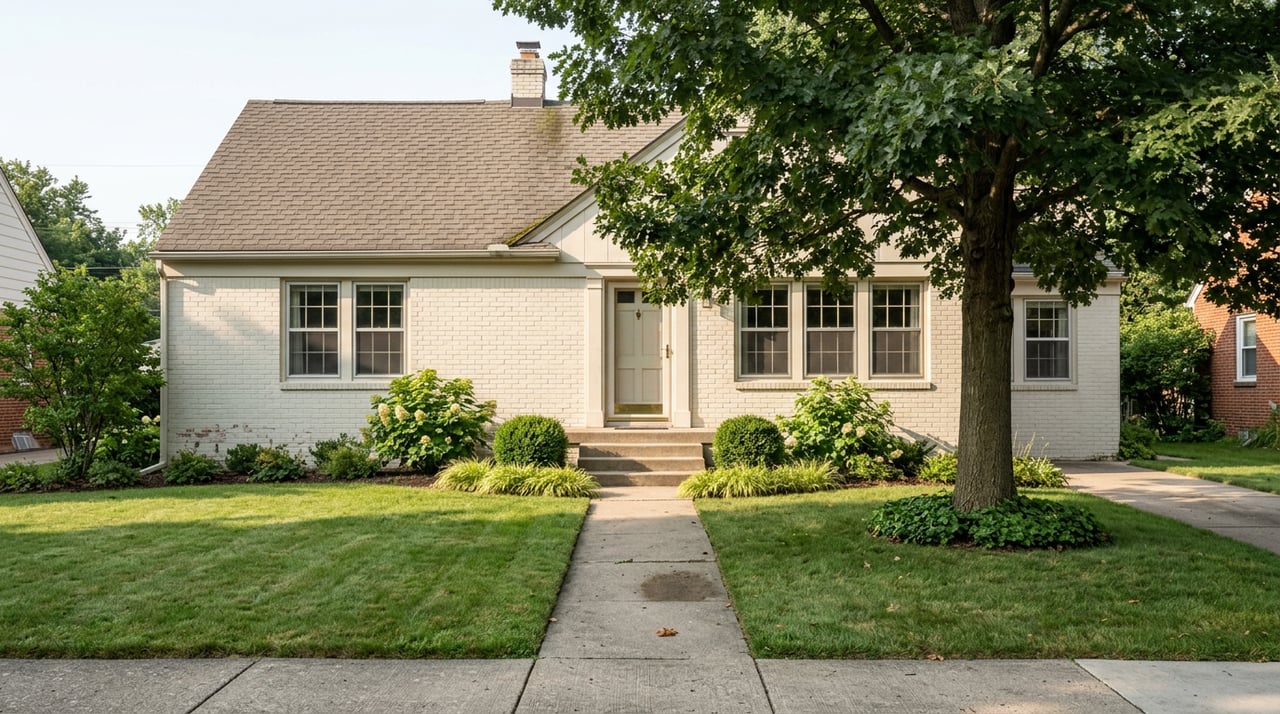
Half a mile separates two projects built by the same Arlington developer, and right now they're worth two very different things.
One is a trio of townhomes going up on N. Burlington Street in Bluemont, on a lot that already carried duplex zoning before anyone had heard the phrase "Missing Middle." Both available units are listed at $1,899,000, with an open house scheduled for August 15. The other is a lot the same builder, J. Alex Wilson of Wilsons Ventures, has left alone entirely. "I haven't taken on any new EHO projects because it's still all up in the air," Wilson told ARLnow this month, after pulling his firm out of the Virginia Supreme Court case that will decide whether Arlington's Expanded Housing Option survives at all.
Same builder. Same county. Same general idea of adding housing where only one house stood before. But one project is going up and selling, and the other doesn't exist, because its legal foundation is still being argued in front of judges. If you're comparing single-family lots in Arlington right now and treating "redevelopment potential" as a line item you can price the way you'd price a renovated kitchen, you're missing the actual mechanism at work.
A permit isn't a promise in Arlington right now
According to Patch, the Expanded Housing Option, adopted unanimously by the Arlington County Board in March 2023, allows by-right construction of two to six-unit buildings on land that was previously zoned for single-family homes only. The county capped it at 58 permits per calendar year, with that cap set to sunset at the end of 2028.
What makes EHO different from an ordinary zoning allowance is what happened next. According to the county's annual EHO data report, a group of homeowners, led by plaintiff Marcia Nordgren, sued the county months after adoption. In September 2024, WUSA9 reported that Circuit Court Judge David Schell ruled against the county on four of six counts and voided the ordinance from its inception, not just going forward. According to YIMBY Law, forty-five multifamily projects, already approved, already in some cases under construction, were paused overnight.
That's the part a listing sheet won't tell you.
Three years, one still-open question
The case has moved through Virginia's courts in a pattern that keeps resetting the clock rather than resolving anything. According to ARLnow, the Court of Appeals reversed Judge Schell's ruling in June 2025, but only on a technicality: the developers holding EHO permits, including Wilsons Ventures, hadn't been properly included as parties to the original lawsuit. That reversal let the county resume accepting and reviewing EHO applications on October 1, 2025. It did not touch whether EHO itself is legal.
The homeowners appealed that procedural reversal to the Virginia Supreme Court, which agreed on May 19, 2026 to take up the case. Oral arguments on the underlying merits are expected this fall, and plaintiffs filed a 51-page brief on July 29, 2026. County spokesperson Erika Moore confirmed to ARLnow that the underlying merits of the EHO case still haven't been decided by any appellate court. Whatever happens this fall, a Neighbors for Neighborhoods spokesperson has said he expects the case will still need to go to trial on those merits afterward.
So as of today, an Arlington homeowner has watched EHO get adopted, sued, voided entirely, partially reinstated on a technicality, and appealed again, in the space of three years, and still doesn't have a final answer on whether it's legal.
Why lenders won't touch the uncertainty
This is where the friction becomes real money. When the ordinance was first voided in late 2024, the Arlington Wins group noted that most of the 45 paused permit holders wouldn't continue their projects, not because they lacked the right to under the partial stay, but because the ongoing lawsuit made obtaining financing and title insurance for those properties practically impossible. A lender or title company underwriting a construction loan doesn't want collateral built on a legal foundation a judge could retroactively erase.
A Whiteford client alert on the 2025 reversal put the flip side plainly: with EHO back on the books, "lenders and buyers may gain confidence, and paused deals could unfreeze." That sentence only makes sense if the opposite was also true, that confidence had been withheld while the ordinance's status was unresolved. With the case now back in front of the Virginia Supreme Court and a full merits trial still likely afterward, that same hesitation is the rational posture for anyone financing new construction under EHO today, regardless of what the county's permit tracker currently shows as active.
The same builder shows you the difference
Wilson's own projects are the cleanest illustration of the mechanism. The Bluemont townhomes on N. Burlington Street don't rely on EHO at all. The lot, in a cul-de-sac off Bluemont Junction Trail, was already zoned for a duplex before Missing Middle existed, so its value was never contingent on a court case. The county's underlying multifamily zoning did the work, and Wilson could build, list, and hold an open house without a Supreme Court docket hanging over the title.
Other Arlington lots aren't so lucky. According to Arlington Magazine, a permit for a lot on 17th Street South in Aurora Hills would have replaced an existing home with a six-unit building, and it's been on hold since the fall 2024 ruling. According to Patch, a four-plex near Halls Hill and Virginia Hospital Center, at 2100 N. George Mason Drive, was approved before the freeze but sits inside the same category of contingent value. According to Arlington Magazine, some Arlington neighborhoods, including a cluster of 1940s duplexes near the Westpost shopping area and Pentagon City Metro, were zoned for multifamily use long before any of this litigation started. Their redevelopment value was never a legal question. It's just zoning.
These lots and projects have different relationships to a single court case and different answers to "what is this actually worth if I want to build more than one unit here."
What the average price is quietly telling you
Arlington's headline price numbers look almost boring next to this legal drama, and that's the point. Arlington's median sale price sat at $818,000 for the three months ending May 2026, up a modest 2.3% year over year. But look at what's happening underneath that median. According to home sales data reported July 10, 2026 and covered by ARLnow, the average sale price across Arlington rose 5.7% to $968,102 in the first half of 2026, and a meaningful part of that increase came from a shift in the sales mix itself: single-family homes made up 43% of June 2026 closings, up from 39% a year earlier.
That's buyers paying up specifically for detached, fee-simple homes, the one category of Arlington housing where value doesn't depend on how a pending court case resolves. Meanwhile, regional data tracked by the Northern Virginia Association of Realtors put average single-family sale prices in Arlington near $1.45 million in late 2025, a segment expected to keep appreciating in 2026 even as attached and multifamily product faces more mixed conditions. The market isn't confused about where the safe money sits right now. It's paying a visible premium for certainty and treating anything tied to EHO's fate as a separate, harder-to-price category.
What this means depending on where you sit
- If you're buying a single-family lot for the home itself, the EHO litigation is mostly irrelevant to you. You're not counting on redevelopment rights, and Arlington's underlying single-family demand remains strong regardless of how the Supreme Court rules.
- If you're buying specifically for redevelopment potential, don't price an EHO-dependent lot as if the zoning right is fully secured. Ask whether the specific property's multifamily potential comes from EHO or from pre-existing zoning, the way Wilson's Bluemont project does. That distinction is the whole ballgame.
- If you're selling an older single-family home in a formerly single-family-only zone, understand why buyers and their lenders may be discounting the redevelopment story you're telling, even if a similar lot sold for a premium two years ago before the litigation resumed its uncertain path.
- If you're financing new construction under an EHO permit right now, expect the same scrutiny that stalled financing during the 2024 freeze. A pending Virginia Supreme Court case with a merits trial still likely to follow isn't the kind of collateral risk most lenders price generously.
A few questions worth asking before you write an offer
Whether you can finance construction on favorable terms while the merits case is still pending is a separate and harder question, one worth putting to your lender before you assume the permit alone settles the property's value.
If you're weighing an older Arlington lot against a newer one, or trying to figure out what an EHO-adjacent listing is actually worth in this environment, that's exactly the kind of analysis Joshua Odmark works through with clients before an offer goes in, not after. Let's Connect.
This article is general information, not legal, tax or financial advice. Consult a qualified professional about your situation.